
The 2025 Risk Science Series workshop, titled “Artificial Intelligence and Risk Management: Navigating Change, Gaining Foresight,” was successfully held at Jianhua Building, Tsinghua University, on September 26, 2025. Co-hosted by the Risk SciencesEditorial Department and the China Center for Insurance and Risk Management (CCIRM), both under Tsinghua University’s School of Economics and Management, the workshop brought together five internationally renowned scholars to share cutting-edge research and insights on AI risk governance.
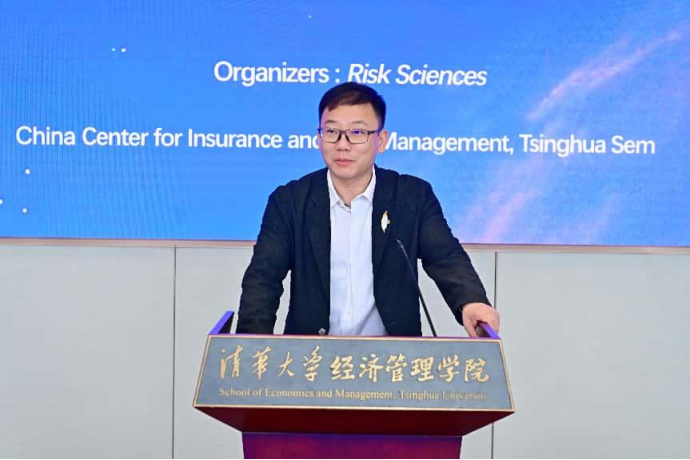
In his opening speech, HE Ping, Associate Dean and Professor of Tsinghua SEM, emphasized that while AI is profoundly reshaping the economy and society, the risks accompanying its rapid development call for scientifically informed governance to balance innovation and safety. He highlighted that the financial sector, in particular, must center on “trust” to tackle challenges such as fairness and liability. By leveraging interdisciplinary research and academic-industry collaboration, Tsinghua University aims to explore frontier issues in AI risk management and foster global cooperation and consensus through events like this workshop.

HE Ping delivering the opening address
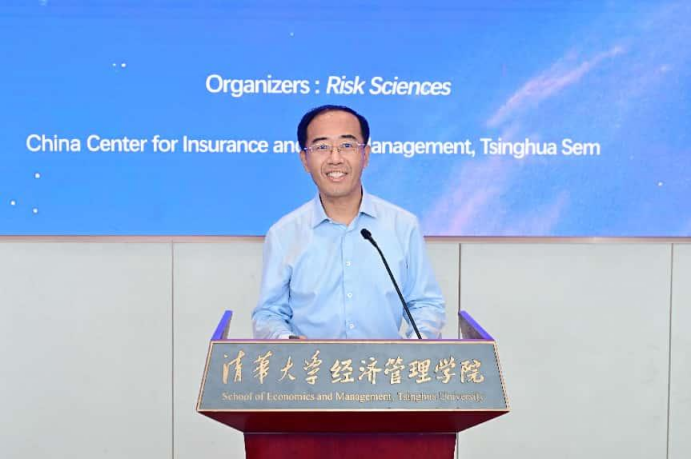
LIANG Zheng, Deputy Director of the Institute for AI International Governance and Professor at the School of Public Policy and Management, Tsinghua University, examined AI development and governance from a Chinese perspective. He systematically outlined new trends in AI application expansion, risk manifestations, and governance needs, sharing China’s practical experience in legal frameworks, ethical guidelines, and international cooperation. LIANG stressed that technological innovation and governance systems must co-evolve to ensure the healthy, sustainable advancement of AI.

LIANG Zheng delivering his speech
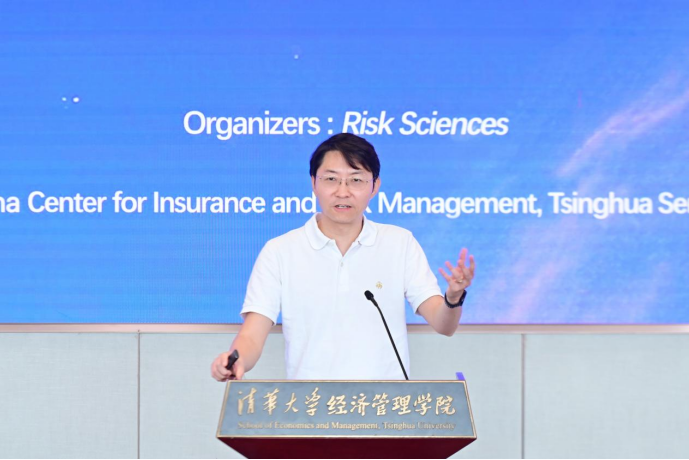
LI Ning, Flextronics Chair Professor and Head of the Department of Leadership and Organization Management at Tsinghua SEM, focused on the application of large models in social science research. He compared differences between human experiments and model simulations in effect size, significance, and reproducibility. LI further noted that generative agents based on large models offer novel perspectives for understanding human behavior and social mechanisms, creating new possibilities for large-scale experimental studies.

LI Ning delivering his speech
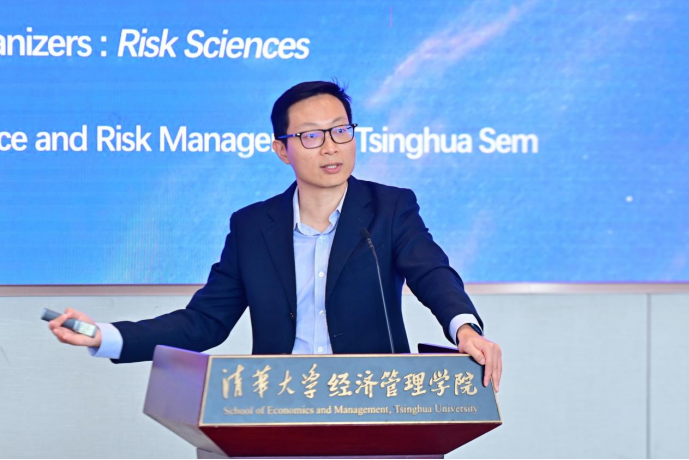
FENG Runhuan, Chair Professor at Tsinghua SEM and Executive Editor-in-Chief of Risk Sciences, delved into the insurability of AI risks. He outlined major risks—such as legal liability, model bias, and societal harm—and criteria for insurability. Drawing parallels to historical transitions from horse-carriage to auto insurance, FENG proposed potential pathways for AI insurance, including warranty certification, industry captives, compulsory coverage, and national risk pools, offering forward-looking ideas for AI risk governance.

FENG Runhuan delivering his speech
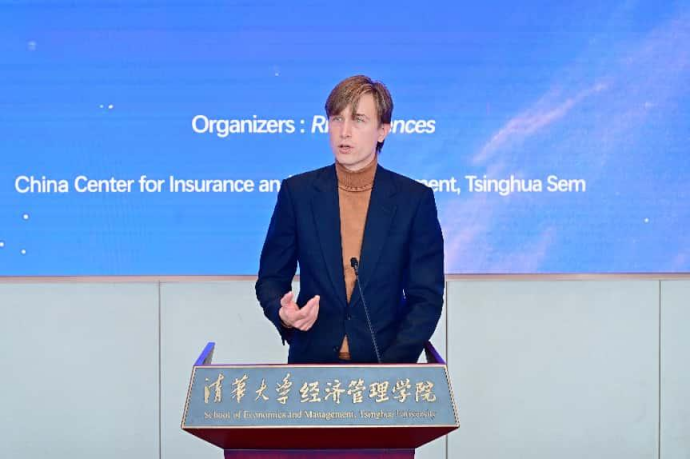
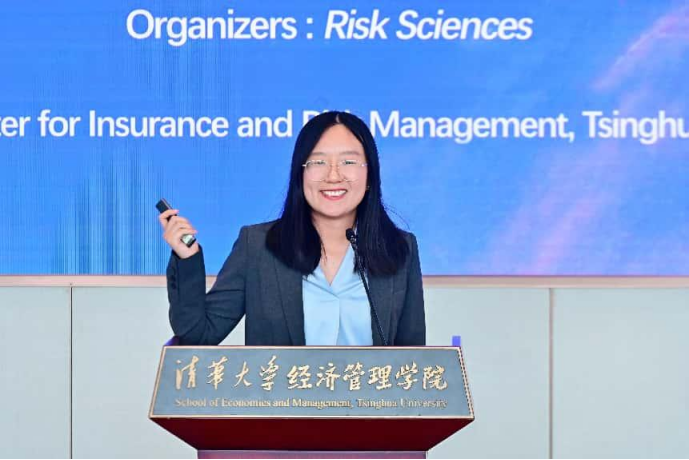
Michael von Gablenz, Head of Global AI Insurance Solutions at Munich Re, and LI Yuanyuan, Senior Research Scientist at Munich Re, analyzed insurance-based management of AI risks. They reviewed global trends in AI-related incidents and litigation, as well as regulatory and corporate responses. The speakers showcased Munich Re’s insurance solutions addressing issues like output errors, discrimination risks, and intellectual property infringement, demonstrating how risk transfer can enhance the trustworthiness and sustainability of AI applications.

Michael von Gablenz delivering his speech

LI Yuanyuan delivering her speech
The participants concurred that risk governance in the era of rapid AI development has become a critical issue spanning economics, society, and technology. Progress will require integrated efforts in legal standards, insurance mechanisms, and cross-disciplinary collaboration. By focusing on the identification, governance, and insurability of AI risks, this workshop not only advanced academic discourse but also served as a platform pooling wisdom from government, industry, academia, and research—contributing new ideas and vision to national economic security and global AI governance.